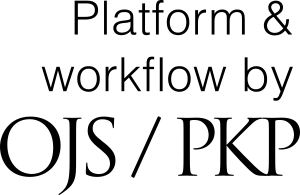
The importance of the scientific study of medicinal plants
DOI:
https://doi.org/10.30973/inventio/2026.22.57/1Keywords:
natural products, pharmacological activity, toxicity, traditional medicineAbstract
Traditional knowledge, passed down from generation to generation, combined with the development of techniques and technologies for extracting and processing natural resources, has made it possible to recognize and identify certain plants and medicinal practices. In Mexico more than four thousand plant species with medicinal properties have been identified, with have traditionally been used in human nutrition and healthcare. This article describes some findings that emerged from applying traditional knowledge in scientific laboratories, chemical and pharmacological studies to understand its application in traditional medicine, identifying active components, as well as its administration and uses.
References
Al-Naqeb, G., Kalmpourtzidou, A., Giampieri, F., De Giuseppe, R. y Cena, H. (2024). Genotoxic and antigenotoxic medicinal plant extracts and their main phytochemicals: “a review”. Frontiers en Pharmacology, 15, 1448731. https://doi.org/10.3389/fphar.2024.1448731
Asami (23 de abril de 2024). Barbasco (Dioscorrea composita Hemsley). Asami. Saber ser, sp. https://asami.mx/barbasco-dioscorrea-composita-hemsley/
Bailey, C. J. (2017). Metformin: historical overview. Diabetologia, 60(9), 1566-1576. https://doi.org/10.1007/s00125-017-4318-z
Bailey, C. J. y Day, C. (1989). Traditional plant medicines as treatments for diabetes. Diabetes Care, 12(8), 553-564. https://doi.org/10.2337/diacare.12.8.553
Biblioteca Digital de la Medicina Tradicional Mexicana (2009a). Bugambilia. Atlas de las Plantas de la Medicina Tradicional Mexicana. Biblioteca digital de la Medicina Tradicional Mexicana, sp. http://www.medicinatradicionalmexicana.unam.mx/apmtm/termino.php?l=3&t=bougainvillea-glabra
Biblioteca Digital de la Medicina Tradicional Mexicana (2009b). Manzanilla. Atlas de las Plantas de la Medicina Tradicional Mexicana. Biblioteca Digital de la Medicina Tradicional Mexicana, sp. http://www.medicinatradicionalmexicana.unam.mx/apmtm/termino.php?l=3&t=matricaria-recutita
Banaee, M., Impellitteri, F., Multisanti, C. R., Sureda, A., Arfuso, F., Piccione, G. y Faggio, C. (2023). Evaluating silymarin extract as a potent antioxidant supplement in diazinon-exposed rainbow trout: oxidative stress and biochemical parameter analysis. Toxics, 11(9), 737. https://doi.org/10.3390/toxics11090737
Braña, M. F., Del Río, L. A., Trives, C. y Salazar, N. (2005). La verdadera historia de la Aspirina. Anales de la Real Academia Nacional de Farmacia, 71(4), 813-819. https://core.ac.uk/download/pdf/230309898.pdf
Comisión Nacional para el Conocimiento y Uso de la Biodiversidad (2023). Diccionario de datos. Especímenes publicados en el geoportal y el sitio del Sistema Nacional de Información sobre Biodiversidad. CONABIO. https://www.snib.mx/ejemplares/docs/CONABIO-SNIB-DiccionarioDatosEjemplaresGeoportal-202211.pdf
Corchete, P. (2008). Silybum marianum (L.) Gaertn: the source of silymarin. Bioactive molecules and medicinal plants (pp. 123-148). Springer. https://doi.org/10.1007/978-3-540-74603-4_6
Cruz, M. de la (1552). Códice Badiano (J. Badiano trad.). Biblioteca Nacional de Antropología e Historia “Dr. Eusebio Dávalos Hurtado”. https://repositorio.inah.gob.mx/o-53581
Dai, Y.-L., Li, Y., Wang, Q., Niu, F.-J., Li, K.-W., Wang, Y.-Y., Wang, J., Zhou, C.-Z. y Gao, L.-N. (2023). Chamomile: a review of its traditional uses, chemical constituents, pharmacological activities and quality control studies. Molecules, 28(1), 133. https://doi.org/10.3390/molecules28010133
Díaz Villagómez, D. G., Hernández Ramírez, R. E., Cruz Cruz, D. y Villegas Gómez, C. (2023). Análisis fitoquímico: una visión integral de los métodos de extracción de productos naturales. Naturaleza y Tecnología, 10(1), 22-35. http://naturalezaytecnologia.ugto.mx/index.php/nyt/article/view/473
El Mihyaoui, A., Esteves da Silva, J. C. G., Charfi, S., Candela Castillo, M. E., Lamarti, A. y Arnao, M. B. (2022). Chamomile (Matricaria chamomilla L.): a review of ethnomedicinal use, phytochemistry and pharmacological uses. Life, 12(4), 479. https://doi.org/10.3390/life12040479
Escaliment (28 de abril de 2020). El que siembre plantas, recoge medicamentos. Esciencia, sp. https://share.google/tppLNYr2xPlUrNPpX
Espinoza-Zúñiga, P., Ramírez-Dávila, J. F., Cibrián-Tovar, D., Villanueva-Morales, A., Cibrián-Llanderal, V. D., Figueroa-Figueroa, D. K. y Rivera-Martínez, R. (2019). Modelación de la distribución espacial del muérdago (Santalales: Loranthaceae) en las áreas verdes de la delegación Tlalpan, México. Bosque (Valdivia), 40(1), 17-28. https://doi.org/10.4067/S0717-92002019000100017
Galván-González, L. G., Cerros-Tlatilpa, R., Flores-Morales, A., Caspeta-Mandujano, J. M. y Flores-Castorena, Á. (2022). Diversidad y riqueza de plantas parásitas del estado de Morelos, México. Botanical Sciences, 100(3), 729-747. https://doi.org/10.17129/botsci.2964
IM Médico (10 de abril de 2024). Unión entre ciencia y tecnología para extraer todos los beneficios de los ingredientes de origen natural. IM Médico. Medio acreditado para la innovación médica, sp. https://www.immedicohospitalario.es/noticia/45359/union-entre-ciencia-y-tecnologia-para-extraer-todos-los-beneficios-d.html
Instituto Nacional de Investigaciones Forestales, Agrícolas y Pecuarias (1 de junio de 2018). Identificación, distribución y control de muérdago enano en bosques de coníferas. Gobierno de México, sp. https://www.gob.mx/inifap/prensa/identificacion-distribucion-y-control-de-muerdago-enano-en-bosques-de-coniferas
Johnson, O. (2022). Salix alba L. [fotografía]. Trees and Shrubs Online, sp. https://www.treesandshrubsonline.org/articles/salix/salix-alba/
Lange, P. de (2013). Cardo mariano (Silybum marianum) [fotografía]. iNaturalist. https://www.inaturalist.org/observations/2573904
Latief, U. y Ahmad, R. (2018). Herbal remedies for liver fibrosis: A review on the mode of action of fifty herbs. Journal of Traditional and Complementary Medicine, 8(3), 352-360. https://doi.org/10.1016/j.jtcme.2017.07.002
Lima López, Y., Guzmán Guzmán, V., López Linares, Y. y Satchwell Robinson, R. (2019). La medicina tradicional herbolaria en los sistemas de salud convencionales. Humanidades médicas, 19(1), 201-217. https://humanidadesmedicas.sld.cu/index.php/hm/article/view/1273
Loef, M. y Walach, H. (2020). Quality of life in cancer patients treated with mistletoe: a systematic review and meta-analysis. BMC Complementary Medicine and Therapies, 20, 227. https://doi.org/10.1186/s12906-020-03013-3
López Austin, A. (1993). Textos de medicina náhuatl. UNAM. https://www.mesoweb.com/es/articulos/sub/Medicina.pdf
López Domínguez, J. C. (2015). Barbas (Phoradendron velutinum) [fotografía]. iNaturalist. https://www.inaturalist.org/observations/1721024
Mesa Vanegas, A. M. (2017). Una visión histórica en el desarrollo de fármacos a partir de productos naturales. Revista Mexicana de Ciencias Farmacéuticas, 48(3), 16-27. http://www.redalyc.org/articulo.oa?id=57956616003
Montoya-Inzunza, L. A., Heredia, J. B., Patra, J. K., Gouda, S., Kerry, R. G., Das, G. y Gutiérrez-Grijalva, E. P. (2024). Traditional uses, phytochemical constituents and ethnopharmacological properties of mistletoe from Phoradendron and Viscum species. Combinatorial Chemistry & High Throughput Screening, 27(8), 1093-1110. https://doi.org/10.2174/1386207326666230825113631
NTX (6 de junio de 2017). Llevan a cabo acciones para combatir el muérdago en Zapopan. El Informador, sp. https://www.informador.mx/Jalisco/Llevan-a-cabo-acciones-para-combatir-el-muerdago-en-Zapopan-20170606-0115.html
Ontiveros-Rodríguez, J. C., Rojas-Rojas, F. U., Alonso-Castro, A. J. y Salazar-Gómez, A. (2023). American mistletoes as a promising source of bioactive compounds. Studies in Natural Products Chemistry, 78, 237-253. https://doi.org/10.1016/B978-0-323-91253-2.00020-0
Organismo Andino de Salud-Convenio Hipólito Unanue, Organización Panamericana de la Salud y Organización Mundial de la Salud (2025). “Aún nos cuidamos con nuestra medicina”: actualización del inventario sistematizado de las prácticas sanitarias tradicionales existentes en las poblaciones originarias de los países andinos. OPS/ORAS/CONHU. https://www.paho.org/es/documentos/aun-nos-cuidamos-con-nuestra-medicina
Organización Munidal de la Salud (2013). Estrategia de la OMS sobre medicina tradicional 2014-2023. OMS. https://iris.who.int/handle/10665/95008
Organización Mundial de la Salud (14 de mayo de 2025). Proyecto de estrategia mundial sobre medicina tradicional 2025-2034. 78.ª Asamblea Mundial de la Salud. OMS. https://apps.who.int/gb/ebwha/pdf_files/WHA78/A78_4Add1-sp.pdf
Procuraduría Federal de Protección al Ambiente (7 de abril de 2019). Universo de atención en materia de vida silvestre. Gobierno de México, sp. https://www.gob.mx/profepa/acciones-y-programas/universo-de-atencion-en-materia-de-vida-silvestre
Pérez Hernández, C. Y., Cocoletzi Vásquez, E. y Ramos Robles, M. I. (2023). Muérdago: una plaga o un recurso en el bosque. Revista Digital Universitaria, 24(3). http://doi.org/10.22201/cuaieed.16076079e.2023.24.3.6
Pérez Leirós, C. (2010). La aspirina y los caminos diversos del desarrollo de nuevos fármacos. Química Viva, 9(2), 65-75. https://www.redalyc.org/pdf/863/86314868003.pdf
Pérez-Valladares, C. X. y Farfán-Heredia, B. (2024). Biocultural landscapes and the scalability of biocultural heritage. Journal of Latin American Geography, 23(2), 16-41. https://doi.org/10.1353/lag.2024.a939017
Pryme, I. (2009). Patente no. PCT/NO01/00446. Onsagers AS.
Ravikumar, P. M. y Pratheep, T. (2022). Exploring the therapeutic properties of Bougainvillea glabra: A study of its antimicrobial and antioxidant effects in methanol extract. Annals of Forest Research, 65(1), 11285-11292. https://es.scribd.com/document/979632900/11285
Sutton, J. (2022). Taxus brevifolia Nutt. [fotografía]. Trees and Shrubs Online, sp. https://www.treesandshrubsonline.org/articles/taxus/taxus-baccata/
Sánchez-Aguirre, O. A., Linares-Márquez, P., Sánchez-Medina, A. y Cano-Asseleih, L. M. (2021). Consideraciones bioéticas para la investigación científica de plantas medicinales contra el cáncer en México. Revista Latinoaméricana de Bioética, 21(1), 45-60. https://doi.org/10.18359/rlbi.5010
Santana, B. F. de, Santos-Neves, P. S., Voeks, R. A. y Funch, L. S. (2024). Urban ethnobotany in local markets: a review of socioeconomic and cultural aspects. South African Journal of Botany, 170, 401-416. https://doi.org/10.1016/j.sajb.2024.05.041
Secretaría de Medio Ambiente y Recursos Naturales (2021). Plantas medicinales de México. Gobierno de México, sp. https://www.gob.mx/semarnat/articulos/plantas-medicinales-de-mexico
Serrano-Maldonado, M. J., Guerrero-Legarreta, I., De la Paz Pérez-Olvera, C. y Soriano-Santos, J. (2011). Actividad antioxidante y efecto citotóxico de Cladocolea loniceroides (van Tieghem) Kuijt (Loranthaceae). Revista Mexicana de Ingeniería Química, 10(2), 161-170. https://rmiq.org/iqfvp/eVol10No2.html
Sirisarn, W., Mordmuang, A., Kerdkumthong, K. y Saeheng, S. (2024). Exploring Bougainvillea glabra flowers: a promising source of natural antimicrobial and anticancer agents. Journal of Applied Biology & Biotechnology, 12(6), 174-184. https://dx.doi.org/10.7324/jabb.2024.195322
Vasconcellos, C. L. C., Vitório, K. C. D., Andrade, P. A., Cambuí, É. V. F., Lira, A. F., Cavalcante, S. C. H., Estevam, C. S., Antoniolli, A. R. y Thomazzi, S. M. (2009). Antinociceptive, anti-inflammatory, and antioxidant properties of Phoradendron piperoides leaves. Pharmaceutical Biology, 47(7), 645-652. https://doi.org/10.1080/13880200902917065
Verde-Star, M. J., García-González, S. y Rivas-Morales, C. (2016). Metodología científica para el estudio de plantas medicinales. En C. Rivas-Morales, M. A. Oranday-Cardenas y M. J. Verde-Star (eds.), Investigación en plantas de importancia médica (pp. 1-40). OmniaScience. https://books.omniascience.com/index.php/monographs/catalog/book/97
Wagner, H., Feil, B., Seligmann, O., Petricic, J. y Kalogjera Z. (1985). Phenylpropanes and lignans of Viscum album cardioactive drugs, vol. 1. Planta Medica. Journal of Medicinal Plant and Natural Product Research, 52(2), 102-104. https://doi.org/10.1055/s-2007-969090
Waizel-Bucay, J. (2011). Plantas y compuestos importantes para la medicina: los sauces, los salicilatos y la aspirina. Revista de Fitoterapia, 11(1), 61-75. https://www.fitoterapia.net/php/descargar_documento.php?id=4456&doc_r=sn&num_volumen=28&secc_volumen=5961
Weaver, B. A. (2014). How Taxol/Paclitaxel kills cancer cells. Molecular Biology of the Cell, 25(18), 2677-2681. https://doi.org/10.1091/mbc.e14-04-0916
Wikimedia Commons (20 de agosto de 2011). Dioscorea mexicana [fotografía]. Wikipedia. https://es.wikipedia.org/wiki/Archivo:Dioscorea_mexicana_(1).jpg
Wilk, W. (2024). Alfalfa gallega (Gallega officinalis) [fotografía]. iNaturalist. https://www.inaturalist.org/observations/227506666
Witters, L. A. (2001). The blooming of the French lilac. The Journal of Clinical Investigation, 108(8), 1105-1107. https://doi.org/10.1172/JCI14178
Downloads
Published
Issue
Section
License
Copyright (c) 2026 María Guadalupe Valladares-Cisneros, Julia Pérez Ramos, María Salud Pérez Gutiérrez

This work is licensed under a Creative Commons Attribution-NonCommercial 4.0 International License.
Esta revista proporciona acceso abierto inmediato a su contenido, con base en el principio de ofrecer al público un acceso libre a las investigaciones para contribuir a un mayor intercambio global de conocimientos. Se distribuye bajo una licencia Creative Commons Reconocimiento-NoComercial 4.0 Internacional License.